Why Going Full Speed Ahead Early in the Year Often Costs You the Rest of It
By the time January fades into February, many business owners have already done “the right things.”
They’ve reviewed their year-end financials.
They’ve met with their CPA.
They’ve set revenue goals, talked about growth, and made decisions they felt good about in the moment.
And yet… something still feels off.
Decisions feel heavier than they should.
Confidence isn’t quite where it ought to be.
The numbers are visible — but they aren’t providing the sense of control owners expected.
This isn’t a failure.
It’s a pattern.
And it’s a pattern that quietly costs owners far more than they realize.
The Early-Year Rush No One Questions
The first few months of the year come with an unspoken urgency.
Close the books.
Set the goals.
Make the changes.
Keep things moving.
Most owners don’t question this pace — especially seasoned, capable ones. They’ve built successful businesses by moving quickly, making decisions, and staying responsive.
But speed has a hidden cost.
When decisions are made before there’s space to consider what the numbers are really signaling, momentum starts to replace direction.
That’s where early-year urgency quietly undermines control.
Why Looking at Numbers Doesn’t Automatically Create Control
Most business owners look at their numbers.
Very few use them to feel in control.
And when owners don't feel in control of their business, even strong financial results can still lead to hesitation, second-guessing, and reactive decisions.
There’s an important difference.
Reviewing reports gives visibility.
Using numbers within those reports gives confidence.
Profit isn’t an opinion — it’s a signal. But signals only help if you know what they’re pointing to.
Too often, numbers get reduced to:
• “Did revenue go up or down?”
• “What do I owe in taxes?”
• “Do we need to cut expenses?”
Those questions create activity — but not clarity.
And certainly not control.
The Difference Between Seeing Data and Using It
Here’s what I see repeatedly.
Owners dig into their financials at year-end.
They may even look a little deeper than usual.
But then the numbers get set aside once goals are established.
Revenue targets are set.
Growth percentages are chosen.
Expenses are discussed in broad strokes.
What’s missing is interpretation.
Cash flow control doesn't come from watching your bank account balance or top-level numbers on a report.
It starts with understanding one or two key numbers.
It grows by diving into secondary metrics, major variances, and key operational milestones — the data points that influence decisions around hiring, pricing, workload, and owner energy.
Without that connection, numbers become just figures on reports — not leadership tools.
Using financial insight strategically is one of the most effective ways owners regain control of their business without working harder.
Why Avoidance Shows Up (Even for Smart Owners)
Many owners don’t avoid their numbers because they’re bad with finances.
They avoid them because the numbers feel disconnected from action.
Looking deeper often feels like opening another can of work:
More analysis.
More decisions.
More responsibility.
Without a framework to interpret what matters — and how it affects the endgame — numbers add weight instead of relief.
That’s where stress creeps in.
And where even good decisions start to feel uncomfortable.

A Quiet Cost Owners Don’t See at First
Here’s where this shows up most clearly: the owner’s mental and emotional capacity.
In other words, their breathing room.
An owner can be profitable on paper and still feel stretched thin.
They can be making “good” decisions and still feel constantly behind.
They can be moving forward — yet carrying the business entirely in their head.
This is the cost of seeing numbers without using them strategically.
Over time, it becomes one of the biggest constraints on growth -- and on health.
An Observation From the Field
One pattern I see repeatedly with seasoned business owners is this:
They move quickly because they’re capable — not because they’re careless.
That capability is exactly why they sometimes commit to initiatives, set aggressive targets, or restructure roles before giving themselves space to assess what’s most effective at the end of the day.
And that same capability is exactly why many of them feel uncomfortable slowing down — even briefly.
That pause isn’t resistance.
It’s experience — and it’s progress.
Some Consider It an Either / Or
We had one business owner that got caught in an either/or loop. She went from ignoring her company’s financial and operational data to becoming fixated on it, and only it, for driving her team’s actions and her decisions.
When she focused on daily tasks, her and her team were busy and she felt they were making great progress with their growth and client satisfaction, but cash was always tight and the company’s bottom line at the end of each quarter was dismal.
When she concentrated on the metrics, she drove her team harder, thought getting more clients was the solution, and lost sight of her and her team’s energy, her client’s priorities and what was working – what wasn’t.
When we walked through the process and reflected on the interdependence each aspect of her company has on the other: operations, financial, leadership, sales and marketing, she felt like a different person and started seeing positive results all around.
Cash flow was easier to manage.
Her team worked more cohesively.
Deadlines were met easier.
She enjoyed running the business and saw the reality of her endgame.
She went to her grandson’s baseball games.
The company’s bottom line profits started creeping up.
It’s not an either/or situation.
It's using the information you have as a compass to guide your direction and verify you're making the right decisions for your company, and you, overall.
I often see owners fall into an either/or pattern without realizing it.
They focus heavily on operations and client delivery, believing growth will follow once things “settle down.”
Or they pour energy into marketing and sales, assuming the operational side will catch up later.
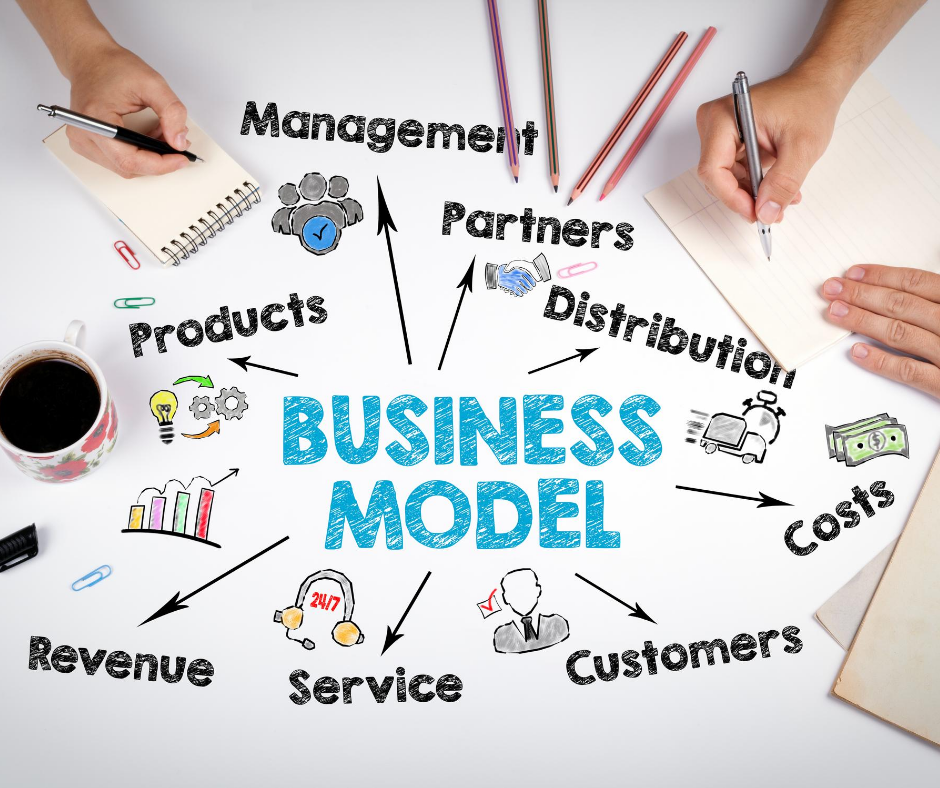
A common example shows up in marketing.
A company ramps up marketing aggressively to bring in new clients.
Capacity fills.
Marketing gets paused.
Then clients churn.
Capacity opens up.
Marketing has to restart from scratch — often under pressure.
This stop‑and‑start cycle creates instability, stress, and inconsistent results.
The issue isn’t effort.
It’s the lack of an integrated lens that keeps financial insight, capacity, and strategic direction working together.
When Numbers Create Direction Instead of Pressure
Control doesn’t come from pushing harder.
It comes from interpretation.
When numbers are connected to priorities, focus, and decision-making, something shifts:
• Decisions feel steadier.
• Trade-offs become clearer.
• Owners regain breathing room.
Short-term actions start driving long-term impact.
The endgame stays visible — even while dealing with day-to-day realities.
A Different Way to Approach the Early Part of the Year
A different approach doesn’t mean doing less.
It means doing fewer things with more intention.
Instead of rushing into execution, it means asking:
• What are these numbers actually telling me?
• What decisions should they influence right now?
• Where do I need steadiness more than speed?
This isn’t about building a massive plan.
It’s about creating a lens that helps decisions stick.
A Resource to Support That Shift
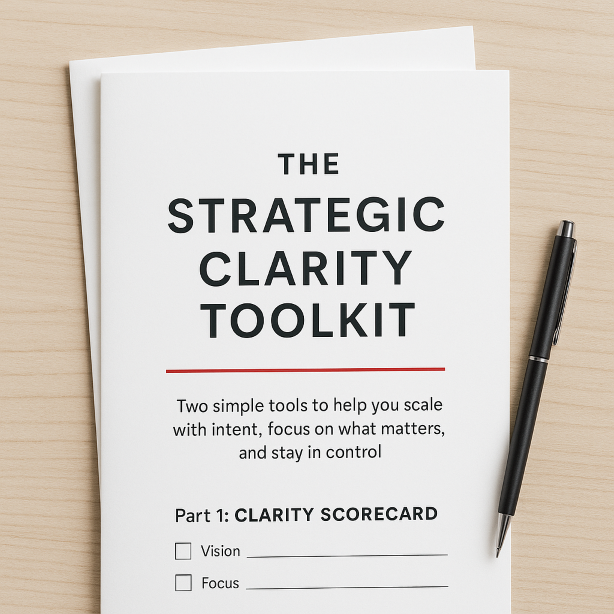
If you’re looking for a way to step back, regain perspective, and reconnect your numbers to real decisions — without turning the early part of the year into another overwhelming planning exercise — the Strategic Clarity Toolkit was created for exactly that purpose.
It’s concise.
Practical.
And designed to help owners use what they already know more effectively.
Because looking at your numbers is common.
Using them to feel in control is not.
And the way you approach the start of the year often determines how the rest of it unfolds.
Receive Strategic Insights for Profitable Growth & Long-Term Value
If you’re focused on building a business that performs well today while becoming more valuable and sustainable over time, you’re in the right place.
I share thoughtful strategic insights for established service-based business owners on profitability, clarity, and intentional growth — along with occasional updates from the Scaling with Intent platform.
No noise. No generic business tips. Just strategic insight for owners scaling with intent.